Aluminum Trimaran Research Vessel

  • Client:
    Australian Institute of Marine Science
  • Completion Date:
    June 2025
  • Key Collaborators:
    One2three Naval Architects|Maritime Survey Australia
  • Project Type:
    Vessel Design & Modification, Research Vessels
  • Service Categories:
    Naval Architecture
    Marine Engineering
  • Vessel Overview:
    154-foot (47-meter) aluminum trimaran research vessel
  • Challenge:
    Develop three concepts for an aluminum research vessel and advance the selected vessel through contract design.

GOOD THINGS COME IN THREES.

When the Australian Institute of Marine Science (AIMS) was seeking a new research vessel to replace the aging R/V Cape Ferguson, they selected Glosten and partner One2three Naval Architects to provide the concept through contract designs.

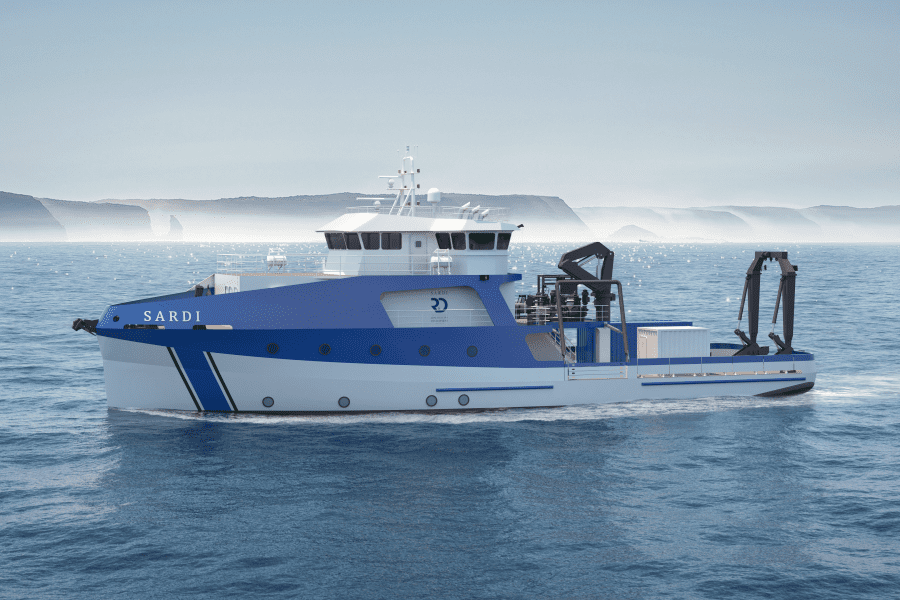
AIMS presented the design team with their vessel requirements, which the design team reviewed and refined to make the requirements as realistic and achievable as possible. Once AIMS and the design team reached a consensus, Glosten and One2three used this document to develop three vessel concepts: a monohull, a catamaran, and a trimaran. The design team then detailed the pros, cons, and tradeoffs of each concept as it pertained to AIMS’ requirements, helping AIMS to make a final selection.

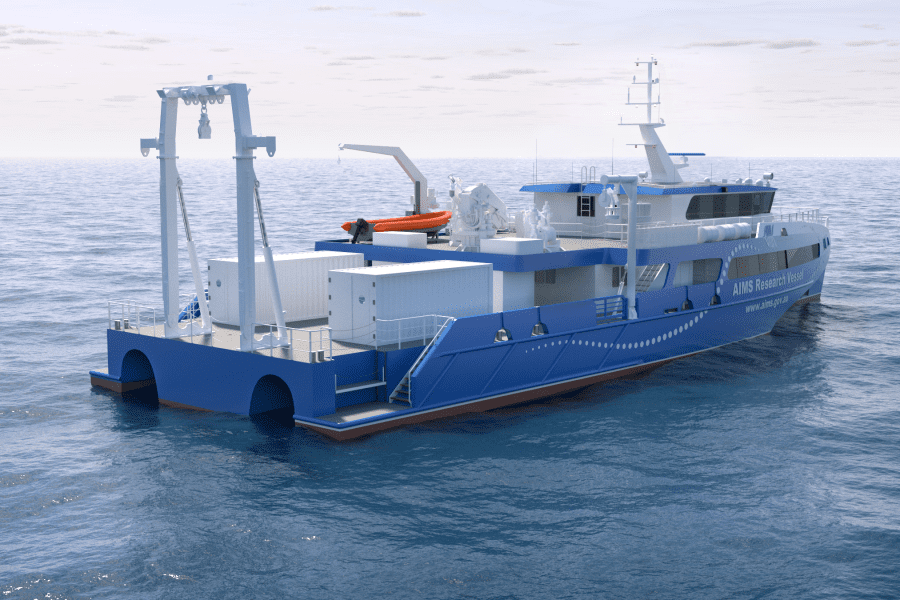
Exterior__Hero Shot Front Perspective_V4- May 2025

THE TRIMARAN TRIUMPHS.

AIMS opted for an aluminum trimaran, chosen for its wide beam and large aft working deck. Working closely with AIMS to incorporate their preferences at decision points and as scenarios with tradeoffs were discovered, the team produced a contract design that will enable AIMS to solicit shipyards and proceed into the construction phase of the project.

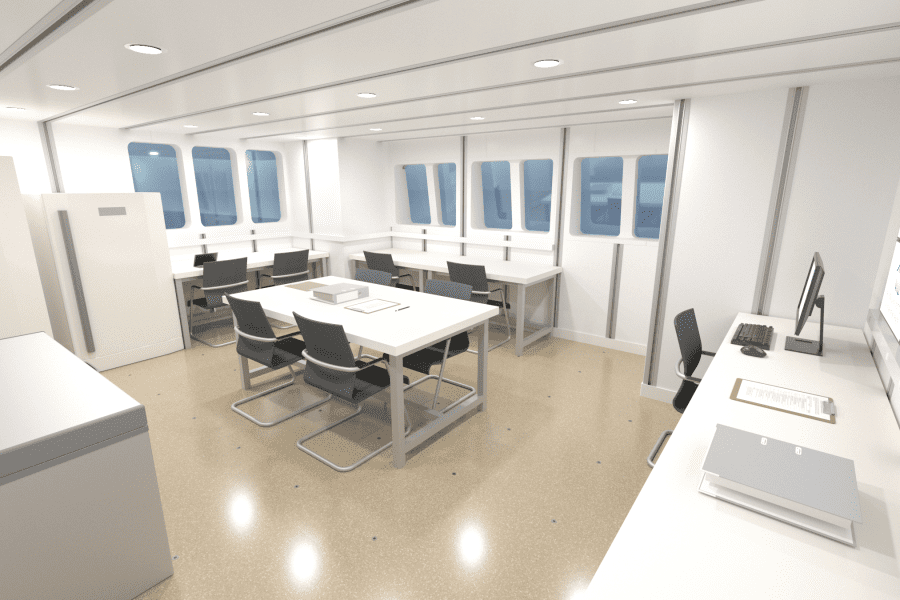
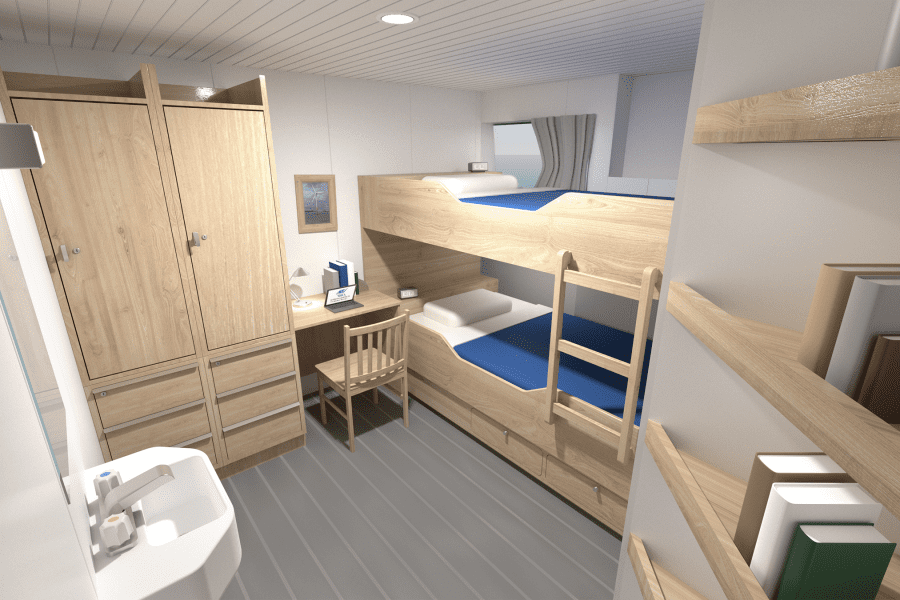
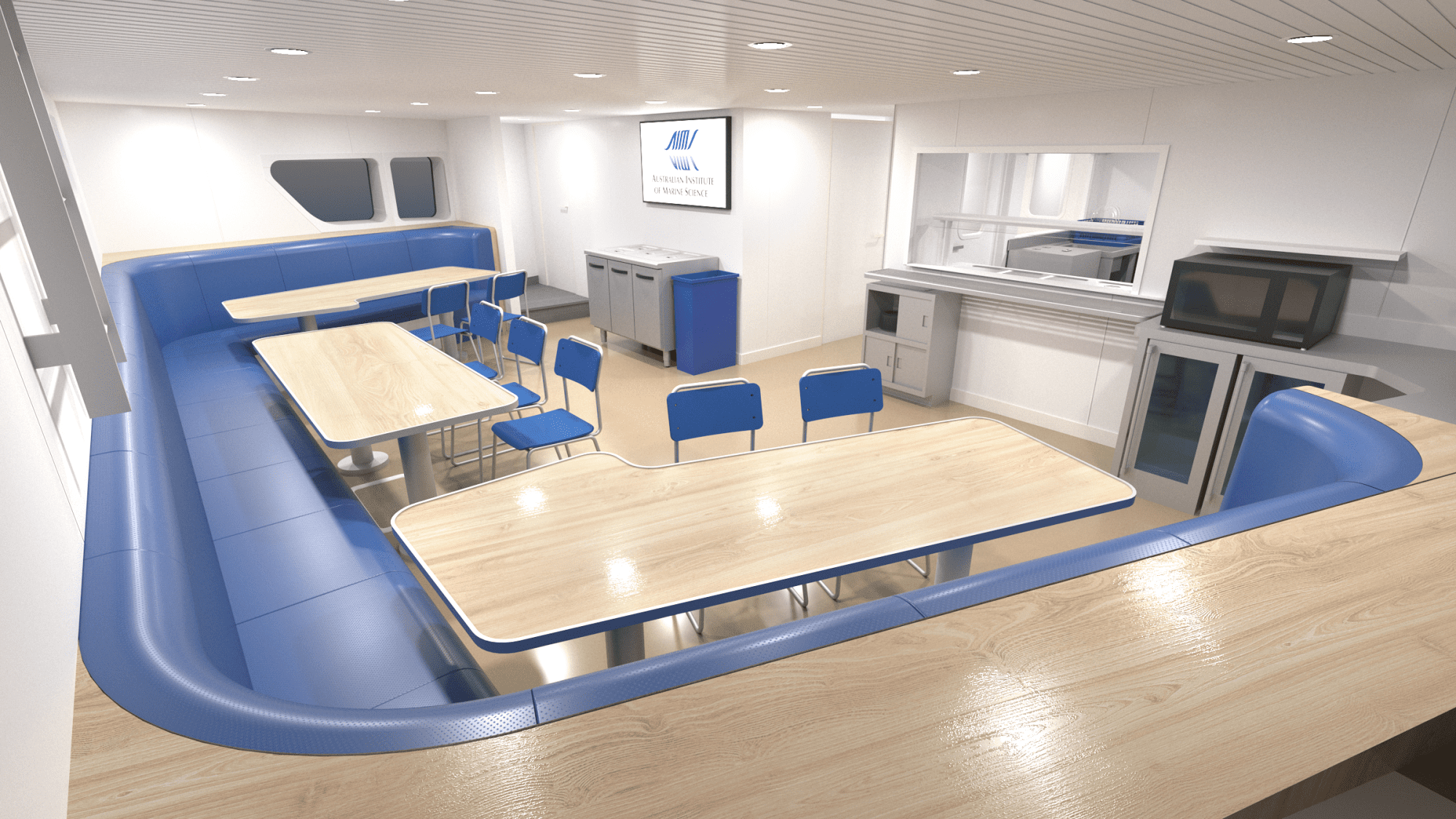
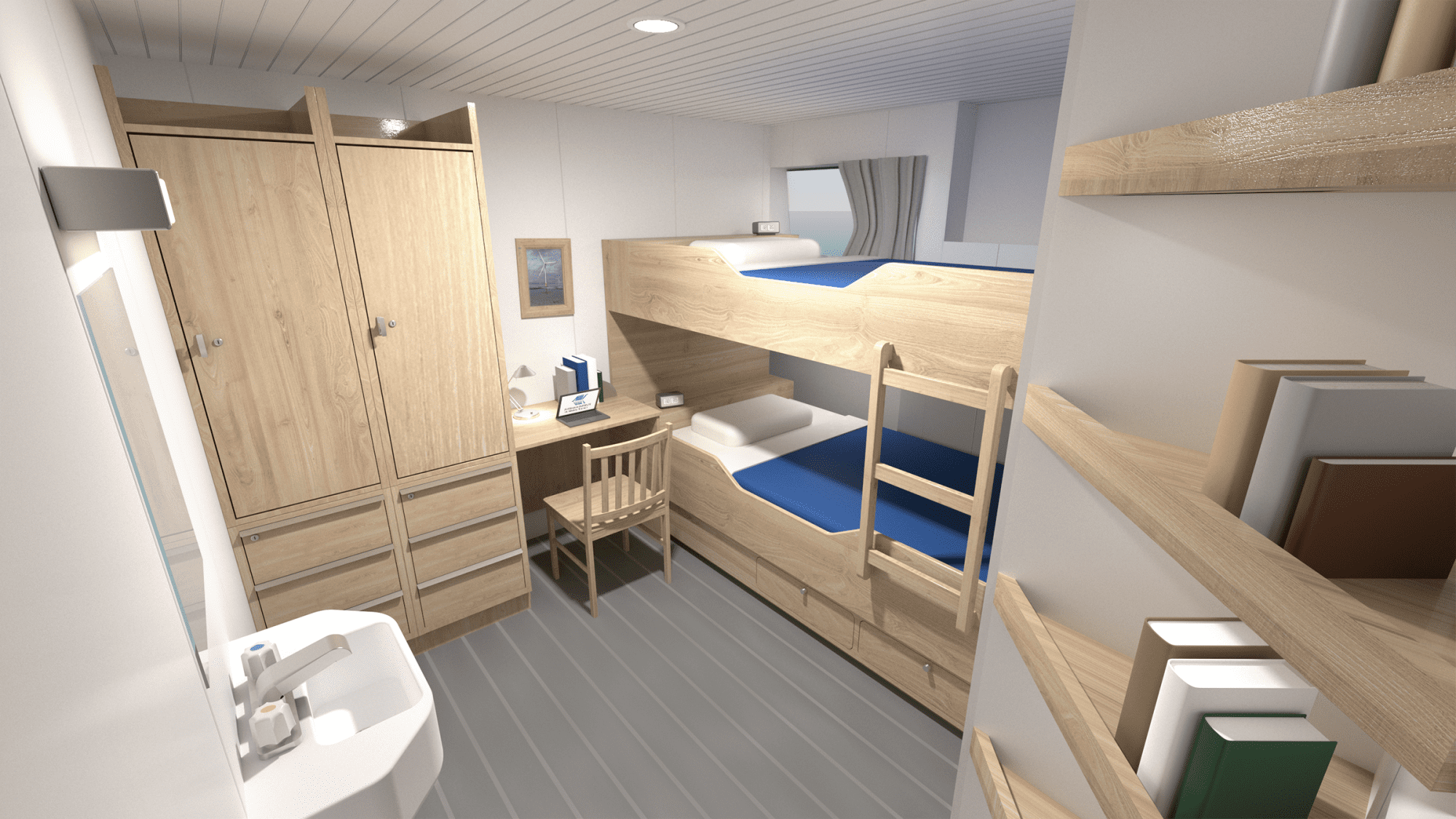
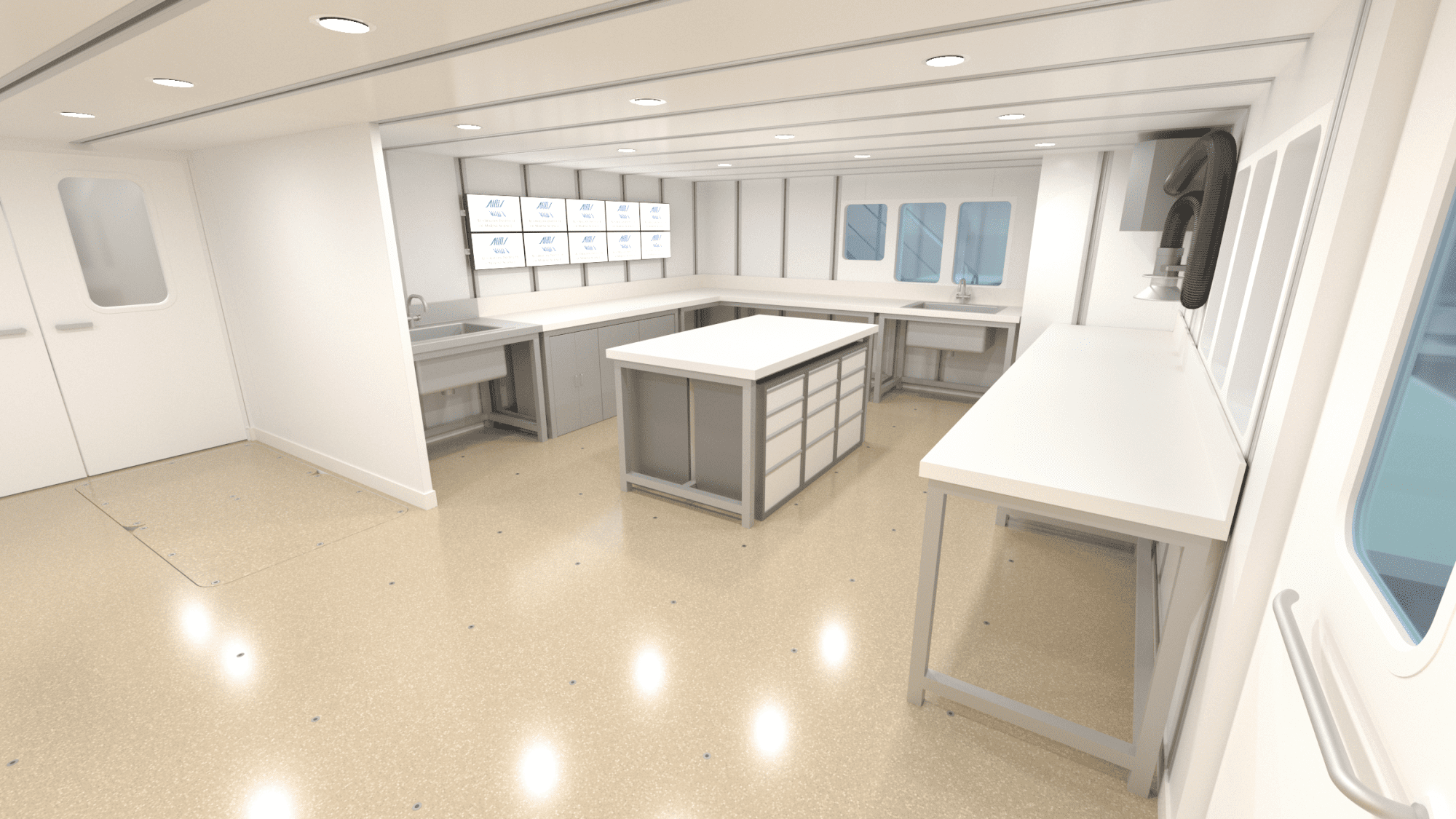
Over the course of three design phases, Glosten and One2three created a design that meets all of AIMS’ requirements. Their new research vessel will be bigger and more capable than its predecessor, with a larger working deck, room for seven crew and 15 scientists on board, and the ability to act as a multi-technology and sensor platform, coordinating a range of autonomous systems. It features dual platforms at the waterline for safe, quick access to the water for science operations, and its upper deck provides ample space for a full overboard handling suite, storage for four working boats, and two UAV launch-and-recovery areas. The trimaran has a parallel hybrid propulsion lineup enabling efficient and quiet performance across multiple operating profiles. The design achieved Approval in Principle from DNV in June 2025.